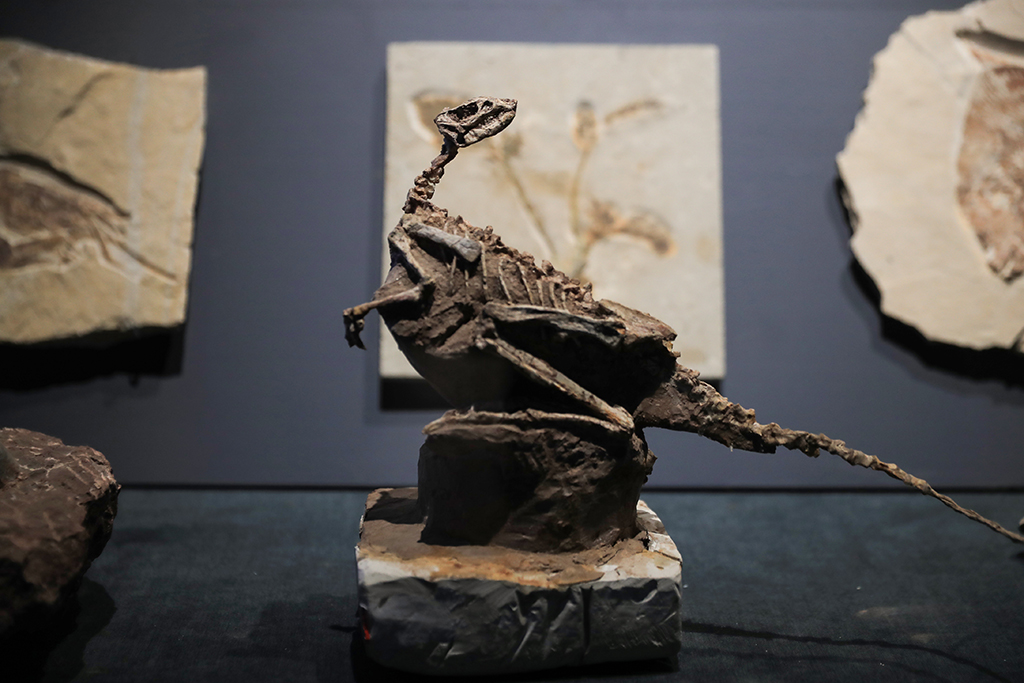
Chengjiang Fossil Site
Introduction
The Chengjiang Fossil Site, located in Chengjiang county, Yunnan province, China, represents one of the most pivotal discoveries in paleontology. This site offers the most comprehensive record of an early Cambrian marine community, exhibiting exceptionally well-preserved fossils that reveal the anatomy of both hard and soft tissues in a wide variety of organisms. These include invertebrates and vertebrates, providing invaluable insights into early life on Earth. The site documents over 196 species across at least sixteen phyla, showcasing the rapid diversification of life approximately 530 million years ago, a period when nearly all major animal groups began to emerge. Added to the World Heritage List in 2012, the Chengjiang Fossil Site opens a significant palaeobiological window for academic exploration and understanding.
Geological Significance
The Chengjiang Fossil Site holds immense geological significance, offering a rare glimpse into the early Cambrian period approximately 530 million years ago, known for the Cambrian explosion—a pivotal event characterized by the rapid diversification of life forms.
Chengjiang boasts the earliest specimens from various phyla such as cnidarians, ctenophores, and priapulids, providing insights into the intricate marine ecosystems of the Cambrian era and the diverse ecological niches that emerged during that time. Particularly noteworthy is the site's exceptional preservation of both hard-shelled and soft-bodied organisms. Soft-bodied specimens are typically scarce in the fossil record due to their delicate nature, yet the Chengjiang fossils reveal detailed soft tissue structures, including eyes, muscles, and even blood vessels.
A key contribution of the site to paleontology lies in its documentation of the earliest known fossil chordates, which encompass all vertebrates. In 1984, paleontologist Hou Xianguang unearthed over 280 fossil varieties, including the remains of the earliest known vertebrate—the Kunming fish (Myllokunmingia)—considered an ancestor of humans 500 million years ago. The paleontological discoveries at Chengjiang are celebrated as some of the most remarkable scientific findings of the 20th century.
The Chengjiang Fossil Site serves as a testament to the complexity and diversity of early Cambrian life, providing a distinctive perspective on the evolutionary processes that shaped marine ecosystems during that period. This site offers an unparalleled opportunity to delve into the biology and evolutionary history of these early life forms, illuminating the origins of biodiversity.
Conservation and Scientific Research
As a natural site of immense scientific value, the Chengjiang Fossil Site is subject to rigorous conservation and preservation efforts. Efforts to conserve the site include restrictions on access to preserve its integrity, as well as ongoing research and monitoring by paleontologists and conservators. The construction of the Chengjiang Fossil Site Natural History Museum serves both as a protective measure for the fossils and as an educational hub to increase public awareness of their importance. The museum engages visitors with advanced technologies such as VR and interactive displays, fostering an appreciation for the site's natural heritage and the broader evolutionary stories of life on Earth.
Scientific research at the Chengjiang Fossil Site continues to yield critical insights into the early evolution of life. Researchers study the fossils to decode the evolutionary pathways of early Cambrian fauna, shedding light on the morphological and genetic developments that led to the diversification of life forms. The site serves as a natural laboratory for understanding the ecological dynamics of ancient marine communities, providing evidence of early predator-prey interactions and the establishment of complex food chains. The detailed preservation of specimens allows scientists to examine the biology of these organisms in unprecedented detail, contributing to our understanding of developmental biology and evolutionary biology. Collaborative research efforts often involve international teams, highlighting the global scientific interest in the extraordinary fossils of Chengjiang.
Cultural and Historical Impact
The discovery and subsequent study of the Chengjiang Fossil Site have had a profound cultural and historical impact. As China's first World Heritage Site dedicated to paleontological fossils, it has become a symbol of the country's rich natural history and scientific heritage. The site and its museum draw scientists, students, and tourists worldwide, fostering a deeper appreciation for the Cambrian explosion and its role in shaping the biodiversity of our planet. Natural history museum curator Chen Taimin envisions the site as a hub for science education and tourism, with plans to develop hands-on educational programs for children and interactive tours for fossil enthusiasts. This engagement with the public not only elevates the site's cultural significance but also encourages an ongoing dialogue about the importance of preserving our natural heritage for future generations.








